Local SEO for New Jersey Service Businesses: A Practical Map to More Calls
Stop chasing every town in New Jersey. Build local visibility from your real service area with better pages, proof, reviews, and tracking.
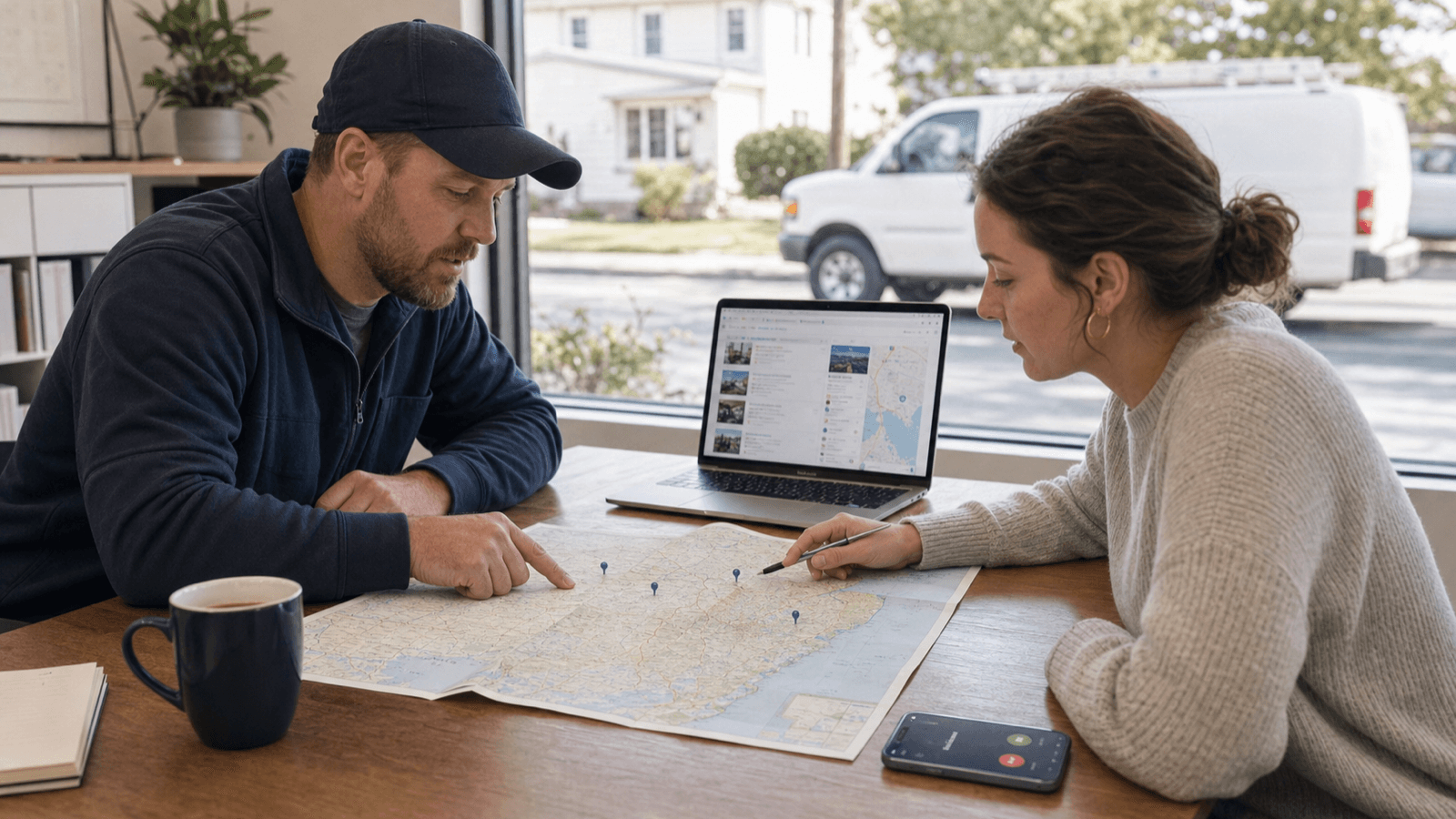
Local SEO starts with the places you can actually serve
Many New Jersey service businesses try to rank for the entire state. That sounds ambitious, but it often produces thin city pages, vague messaging, and very few qualified calls.
The stronger approach is to build local visibility outward from your real service area. Start where you already have customers, proof, and the ability to respond quickly.
Step 1: Define a realistic service map
List the towns that generate your best work today. Group them into a primary zone, a secondary zone, and places you only serve for larger projects.
This matters in New Jersey. A business may be only 25 miles away but separated by traffic, tolls, or a county line that changes customer expectations. Your website should reflect how the business actually operates.
Step 2: Fix your Google Business Profile
Your business name, primary category, phone number, hours, and website should be accurate. Add the services customers request in their own words. Upload recent, real photos of the team, vehicles, work, and location.
Do not stuff city names into the business name. Do not create fake offices. Shortcuts can create listing suspensions and destroy the visibility you were trying to improve.
Step 3: Make the main service pages excellent
Before creating a page for every town, build one authoritative page for each core service. Explain the problem, process, typical timeline, pricing factors, service area, and next step.
A strong service page gives Google and customers something substantial to evaluate. Twenty near-duplicate location pages do not.
Step 4: Add location pages where you have real evidence
A useful town page contains local details that change the decision:
- Projects completed nearby
- Neighborhoods or property types you commonly serve
- Local permitting or scheduling considerations
- Customer reviews from that area
- Real travel or availability expectations
If you can swap the town name and leave every other sentence unchanged, the page is not useful enough.
Step 5: Build a review habit
Ask shortly after a successful job, while the result is fresh. Send the customer a direct review link and make the request personal.
Encourage honest detail instead of scripting keywords. A review that naturally mentions the service and town helps future customers understand whether the business fits their situation.
Step 6: Keep local information consistent
Check major directories, social profiles, trade associations, and vendor listings. Your business name, phone number, website, and location details should agree.
Consistency is not glamorous, but it reduces ambiguity for search engines and customers.
Step 7: Measure calls, not rankings alone
Track which landing pages produce calls and forms. Ask new customers how they found you. Review Google Business Profile activity and website conversions by service area.
A number-one ranking for an irrelevant phrase is worth less than five qualified calls from the right towns.
A practical 30-day order of operations
Week 1: Correct the Google Business Profile and website contact details.
Week 2: Improve the highest-value service page.
Week 3: Publish one evidence-rich location page and request reviews from recent customers.
Week 4: Add call and form tracking, then review what actually generated inquiries.
Local SEO compounds when the website, business profile, reviews, and real-world service area tell the same story. Start with accuracy, then expand based on evidence.
Need a local visibility baseline? Minuswires offers a free website and Google presence audit for New Jersey service businesses.

Mauricio Fernandez
Mauricio Fernandez is the founder of Minuswires. He builds custom websites for startups and growing businesses across NJ and NYC — each one running Brandlism, the growth-intelligence layer he built to get the site found, capture its enquiries, and keep improving it after launch.

Google Business Profile vs Website: What Each Does Best
GBP and your website aren't rivals — one wins local discovery, the other wins trust and conversion. Here's how to set up both so they work together.

Law Firm Client Intake Process: Why Speed Wins Cases
In legal intake, speed beats polish. Here's what should happen in the minutes after a form submission — and why voicemail is quietly costing firms retainers.

How to Get More Tax Clients: The November Build Plan
CPA websites work hardest January–April — which means the real build season is November. Here's the seasonal plan: site prep, Google Business Profile timing, review…
One short field note a week.
What we shipped, what broke, what we'd do differently. Sent Thursday mornings. No spam, unsubscribe in one click.
Build a website that actually grows your business.
Custom websites, apps, and growth systems for startups, new businesses, and rebrands. Every project ships with Brandlism — the growth-intelligence layer that gets the site found, captures enquiries, and keeps improving it after launch.